Colombia Earthquake Kills At Least 111
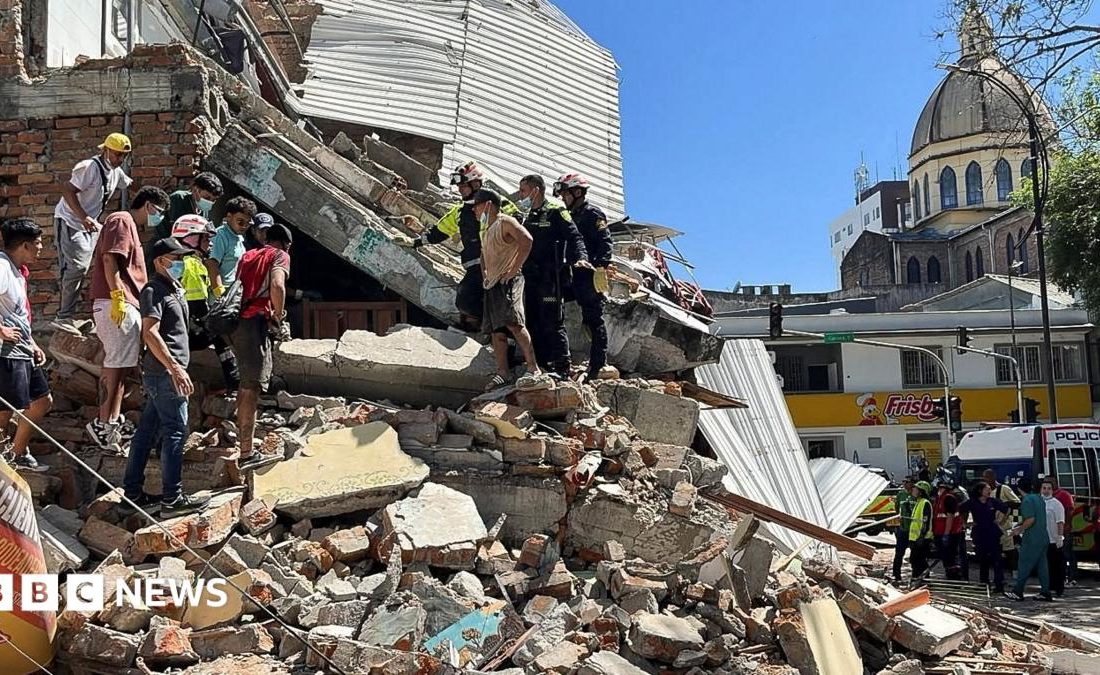
A powerful earthquake struck western Colombia on Monday morning, killing at least 111 people, injuring 87 and triggering a major national emergency response. The magnitude-7.4 tremor collapsed buildings, damaged hospitals and schools, blocked roads and left residents trapped beneath rubble across several departments. Authorities warned that the full scale of the disaster remains unclear as rescue teams continue searching affected communities.
The earthquake struck at approximately 7:34 a.m. local time, with its epicenter near San José del Palmar in the department of Chocó, close to the border with Valle del Cauca. The tremor was felt across much of Colombia, including Bogotá, Cali, Medellín and Pereira, as well as in neighboring Panama, Ecuador and Venezuela. Although the earthquake was inland, officials reported no tsunami threat along Colombia’s Pacific coast.
President Abelardo de la Espriella declared a national disaster and ordered government agencies to prioritize search-and-rescue operations. According to the latest official figures, 1,575 homes were damaged, 37 were completely destroyed and 61 buildings collapsed. Eighteen health centers and 52 educational facilities also suffered damage, complicating efforts to treat the injured and provide shelter for displaced families.
Pereira, located roughly 35 miles from the epicenter, was among the worst-affected cities. Its mayor reported 18 deaths, while emergency crews worked to search damaged structures and transport victims to hospitals. In Cali, landslides were reported and authorities requested additional rescue personnel. Damage to roads and airports disrupted transportation, making it more difficult for emergency teams to reach isolated communities and deliver supplies.
The disaster has also exposed the challenges of responding to emergencies in Colombia’s mountainous and rural regions. Landslides, damaged infrastructure and limited communications have slowed assessments, leaving officials uncertain about conditions in some remote areas. Rescue workers are expected to face continuing risks from unstable buildings and aftershocks as they search for survivors.
The United Nations said it was coordinating with Colombian authorities and the country’s disaster-risk-management agency. UN agencies, including the World Food Programme, the Pan American Health Organization and the International Organization for Migration, offered assistance with food, health services, displacement and emergency logistics. Humanitarian officials also warned that women, children and adolescents can face heightened risks during disasters, particularly when access to medical and protective services is disrupted.
The earthquake came only three days after De la Espriella took office, adding an immediate humanitarian crisis to the new administration’s first week. While the government has mobilized national resources, local authorities are appealing for reinforcements, medical supplies and temporary shelters.
As rescue operations continue, officials are urging residents to remain away from damaged buildings and to follow instructions from emergency services. The death toll may rise as crews reach communities cut off by landslides and debris. For now, Colombia faces a race against time: to find survivors, care for the injured and restore essential services while the country begins confronting the scale of its most devastating earthquake in years.